
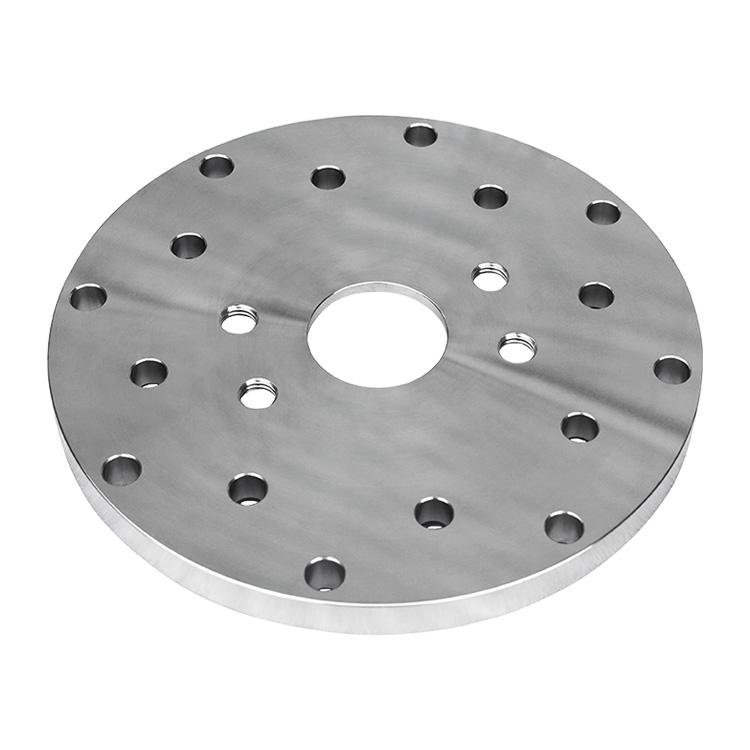
ANSI DIN standard flange solutions are essential connection components used in industrial pipeline systems
across process plants, water treatment facilities, oil and gas infrastructure, chemical processing lines,
power generation plants, and general fluid handling applications. When buyers, engineers, and procurement
teams search for reliable pipeline connection products, ANSI flange and DIN flange
terminology often appears together because both standards play a major role in global piping design,
installation, maintenance, and equipment integration. Understanding the differences, applications, sizes,
pressure classes, facing types, and material options helps improve project planning and supports better
system performance.
This guide provides an original, SEO-friendly overview of ANSI DIN Standard Flange for Industrial
Pipeline Systems, including definitions, key advantages, common specifications, flange types,
dimensional considerations, pressure ratings, material selection, and industry use cases. The content below
is written for direct use in industrial blogs, category pages, product directories, and engineering resource
pages. It focuses on general industry knowledge only and does not include any specific company
recommendations.
An ANSI DIN standard flange refers to a flange designed in accordance with recognized
industrial standards used for pipeline jointing systems. In many cases, the term is used in a practical
commercial sense to describe flanges manufactured for compatibility with either ANSI/ASME
dimensional requirements or DIN standard requirements. Although ANSI and DIN are separate
standard systems, both are widely used in industrial piping and often appear in international projects where
equipment, valves, pumps, and pipe accessories must be connected safely and efficiently.
In pipeline systems, a flange is a mechanical connection device that allows two pipes, pipe sections,
valves, or equipment nozzles to be joined together using bolts and a gasket. A proper flange connection
provides strength, sealing performance, easy assembly, and convenient disassembly for maintenance or
inspection. Because industrial facilities require durable and leak-resistant joints, flange selection is a
critical part of piping design.
Industrial pipeline systems often operate under demanding conditions such as high pressure, elevated
temperature, vibration, corrosive media, and frequent maintenance cycles. Flanges must therefore meet
dimensional accuracy, pressure resistance, and material compatibility requirements. ANSI and DIN flange
standards support standardized manufacturing and installation, which helps reduce connection errors and
improves interchangeability.
The importance of ANSI DIN standard flange products lies in their ability to support:
Although both standards are used for flanges in industrial pipeline systems, they are not identical.
ANSI flange dimensions typically align with ASME/ANSI standards commonly used in North
America and many global projects. DIN flange dimensions follow German DIN standards, which
are widely recognized in Europe and other international markets. Differences may include bolt circle
diameter, bolt hole count, facing dimensions, flange thickness, and pressure rating conventions.
| Item | ANSI Flange | DIN Flange |
|---|---|---|
| Standard Origin | ANSI / ASME-based system | DIN-based system |
| Main Market Use | North America and global industrial projects | Europe and international industrial systems |
| Dimensional Basis | ASME flange dimensions and pressure classes | DIN flange dimensions and pressure ratings |
| Bolt Pattern | Standardized by ANSI/ASME series | Standardized by DIN series |
| Typical Use | Oil, gas, water, chemical, power | Process, utilities, machinery, piping systems |
ANSI DIN standard flange products offer a range of advantages in industrial pipeline systems. Their
standardized design helps project engineers, fabricators, and maintenance teams achieve dependable
mechanical connections with reduced installation uncertainty.
The use of recognized flange standards simplifies system integration. When pipes, valves, pumps, and
equipment nozzles are designed according to ANSI or DIN dimensions, the chance of mismatch is reduced.
Standardization is especially valuable in large-scale industrial piping projects where many connection
points must align accurately.
A flange connection combined with a suitable gasket and bolt load can create an effective seal against
internal pressure and fluid leakage. This is important for industrial pipeline systems transporting water,
steam, oil, gas, chemicals, and other process media.
Flange joints can be opened and reassembled more easily than many permanent pipe joints. This makes
ANSI DIN standard flange systems useful for equipment requiring regular inspection, cleaning, part
replacement, or system upgrades.
Industrial flange standards support a wide range of diameters, pressure classes, and material grades.
This flexibility helps engineers select the right flange for specific operating conditions, including
corrosive environments and high-temperature service.
Because ANSI and DIN standards are globally recognized, they are commonly used in cross-border projects
and multinational industrial installations. This makes them suitable for procurement strategies that require
globally accepted technical specifications.
Industrial pipeline systems use several flange types depending on pressure, piping layout, welding method,
and maintenance requirements. Below are the most common flange types associated with ANSI and DIN standard
systems.
| Flange Type | Typical Function | Common Application |
|---|---|---|
| Weld Neck Flange | Provides strong connection with smooth stress transition | High-pressure and high-temperature pipelines |
| Slip-On Flange | Slides over the pipe and is welded in place | General industrial piping |
| Blind Flange | Closes the end of a piping system or nozzle | Pressure testing and system isolation |
| Threaded Flange | Connects without welding using threaded pipe ends | Low-pressure or non-weld applications |
| Socket Weld Flange | Used with small-diameter high-pressure piping | Compact systems and process lines |
| Lap Joint Flange | Used with a stub end for easy alignment and rotation | Systems requiring frequent dismantling |
| Orifice Flange | Designed for flow measurement instruments | Metering and process control |
Pressure rating is one of the most important elements in flange selection. In ANSI systems, flange pressure
class is commonly expressed as Class 150, Class 300, Class 600, Class 900, Class 1500, and Class 2500.
DIN systems typically use PN ratings such as PN6, PN10, PN16, PN25, PN40, and higher in some applications.
Selecting the correct pressure class is essential for safe operation, gasket performance, and long-term
reliability in industrial pipeline systems.
| Standard System | Common Pressure Ratings | General Usage Notes |
|---|---|---|
| ANSI / ASME | Class 150, 300, 600, 900, 1500, 2500 | Common in North American and global process systems |
| DIN | PN6, PN10, PN16, PN25, PN40 | Common in European and international installations |
ANSI DIN standard flange products are available in a broad size range to support different pipe diameters
and system designs. Typical sizes may begin from small nominal diameters used in instrument and utility lines
and extend to large diameters used in industrial main lines and plant distribution systems.
When evaluating flange size, engineers should consider:
| Nominal Size | Typical Use | Industrial Note |
|---|---|---|
| Small Diameter | Instrumentation, sampling, utility lines | Often used where compact layout is required |
| Medium Diameter | Process piping, water, steam, chemical transfer | Common in plant piping networks |
| Large Diameter | Main pipeline distribution, plant headers | Requires higher structural and sealing control |
Material selection directly affects corrosion resistance, mechanical strength, service temperature, and
lifecycle cost. ANSI DIN standard flange products can be manufactured from a wide range of metals and
alloys depending on the medium and operating conditions.
| Material Type | Main Properties | Common Applications |
|---|---|---|
| Carbon Steel | Strong, economical, widely available | General industrial piping, water, oil, utilities |
| Stainless Steel | Corrosion resistant, hygienic, durable | Chemical, food processing, marine, water treatment |
| Alloy Steel | Suitable for high-temperature and high-pressure service | Power generation, refinery, process systems |
| Duplex Stainless Steel | High strength and strong corrosion resistance | Offshore, chemical, aggressive environments |
| Cast Iron / Ductile Iron | Common in utility and low-to-medium pressure systems | Water supply, drainage, municipal piping |
The flange facing is the sealing surface that contacts the gasket. Proper facing selection is essential for
achieving leak-free performance. ANSI DIN standard flange systems commonly use several facing styles.
| Facing Type | Description | Typical Use |
|---|---|---|
| Raised Face | Most common facing with raised gasket contact area | General industrial applications |
| Flat Face | Flat sealing surface used with matching flat components | Cast iron and low-pressure systems |
| Ring Type Joint | Metal-to-metal sealing for high pressure | Critical process and high-pressure service |
| Tongue and Groove | Interlocking surfaces improve gasket retention | Specialized industrial use |
| Male and Female | Matched facing set for improved alignment | Specific piping and equipment connections |
A flange joint is only as reliable as its bolting and gasket system. Even a correctly manufactured ANSI DIN
standard flange can underperform if the gasket material, bolt grade, tightening sequence, or installation
method is incorrect. Industrial pipeline systems depend on uniform bolt loading and proper sealing surface
preparation.
Key considerations include:
ANSI DIN standard flange components are used across a wide range of industrial sectors. Their flexibility
and standardized design make them suitable for both new installations and retrofits.
| Industry | Typical Flange Use | Key Requirement |
|---|---|---|
| Oil and Gas | Pipeline joints, equipment connections, pressure systems | High pressure and sealing reliability |
| Chemical Processing | Corrosive media transfer and reactor piping | Material compatibility |
| Water Treatment | Pumps, valves, filters, and distribution lines | Durability and maintenance ease |
| Power Generation | Steam, cooling, and auxiliary piping | Temperature resistance |
| Marine and Offshore | Seawater and process piping | Corrosion resistance |
| Food and Beverage | Hygienic process piping and utility systems | Cleanability and safe sealing |
| HVAC and Utilities | Chilled water, steam, and mechanical systems | Standardized installation |
Proper flange selection requires a balance of dimensional compatibility, operating pressure, temperature,
media type, and installation conditions. The wrong choice can lead to leakage, reduced service life, and
unnecessary maintenance costs.
When choosing an ANSI DIN standard flange, evaluate the following points:
Correct installation is essential for flange performance. Even a well-designed ANSI DIN standard flange can
fail if installed improperly. Industrial piping teams should follow recognized engineering procedures and
project specifications.
For SEO and industry reference purposes, the following keyword themes are commonly associated with this topic:
ANSI flange, DIN flange, industrial pipeline flange, pipeline flange standard, flange pressure class, weld neck
flange, slip-on flange, blind flange, flange dimensions, flange facing types, PN flange, ASME flange, piping
connection flange, industrial flange specifications, and standard pipe flange systems.
ANSI DIN standard flange products are a foundation of modern industrial pipeline systems. They support safe
fluid transfer, standardized installation, maintenance accessibility, and long-term operational reliability.
Whether the project requires ANSI dimensions, DIN dimensions, or system compatibility between global piping
components, flange standards remain a key engineering reference for industrial design and procurement.
By understanding flange types, pressure ratings, materials, sizes, facing styles, and installation best
practices, engineers and project managers can improve system performance and reduce leakage risks. For
industrial applications where connection integrity matters, the right ANSI DIN standard flange selection is a
crucial part of successful pipeline system design.
The main purpose is to connect pipe sections, valves, and equipment securely while allowing easy assembly,
disassembly, and maintenance. Flanges also support pressure containment and sealing performance.
Not automatically. ANSI and DIN flanges may differ in dimensions, bolt patterns, and pressure rating systems.
Interchangeability depends on exact compatibility and engineering verification.
Weld neck flanges are commonly used for high-pressure and high-temperature industrial pipeline systems
because of their strong welded connection and stress distribution characteristics.
Carbon steel, stainless steel, alloy steel, duplex stainless steel, cast iron, and ductile iron are among the
most common flange materials depending on service conditions.
Standard selection is important because it affects compatibility, installation, pressure performance,
sealing reliability, and long-term maintenance efficiency.
ANSI DIN standard flange products remain one of the most important connection solutions in industrial
pipeline systems. Their standardized dimensions, broad material options, diverse pressure classes, and proven
mechanical sealing capability make them indispensable in modern piping design. From chemical plants and
refineries to water systems and power facilities, flange-based connections continue to support safe,
serviceable, and efficient industrial operations.
```


Copyright © 2022 Zhejiang Songlin Flange Co., Ltd.
Plan du siteCe site Web utilise des cookies pour vous garantir la meilleure expérience sur notre site Web.

 English
 Español
 Pусский
 Deutsch
 日本語
日本語 한국어
한국어 العربية
 Italiano
 Nederlands



 WhatsApp
 Téléphone
Commentaire
(0)