
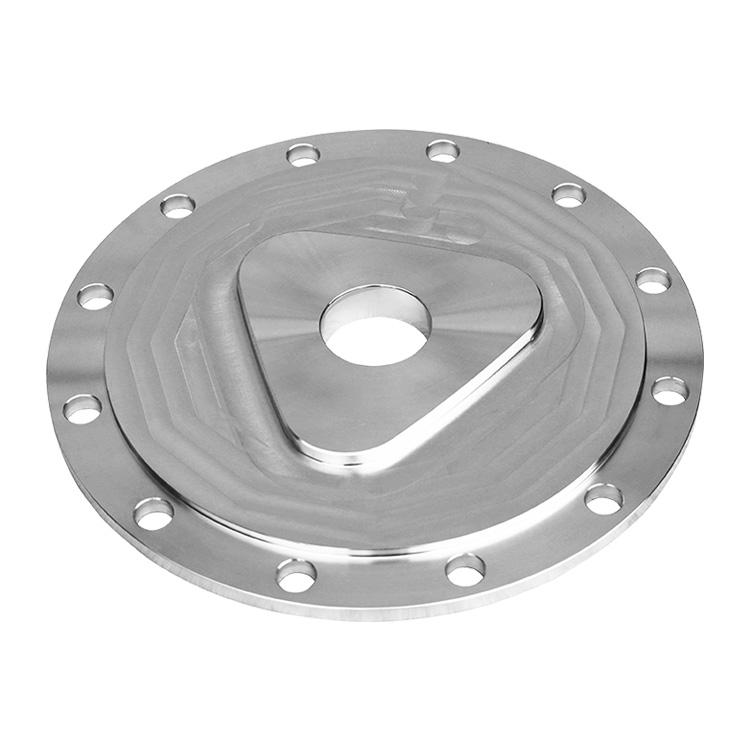
A heavy duty non-standard flange for pressure systems is a specialized connecting component used in
high-load piping, equipment, and pressure-containing applications where standard flange dimensions, ratings, or
geometries are not suitable. These flanges are designed for demanding service conditions, including high pressure,
high temperature, vibration, cyclic loading, corrosion, and custom machinery interfaces. Unlike common standardized
flanges, a non-standard flange is manufactured according to project-specific drawings, special dimensional
requirements, or unique operational constraints.
In modern industrial systems, pressure equipment often requires more than catalog-sized parts. Plants, refineries,
power generation facilities, chemical processing lines, offshore systems, and heavy machinery may need custom flange
solutions to connect pipes, vessels, pumps, valves, manifolds, and pressure chambers. This is where the heavy duty
non-standard flange becomes essential. It provides structural strength, sealing reliability, and installation
flexibility while meeting application-specific engineering needs.
This page provides a detailed overview of heavy duty non-standard flanges for pressure systems, including their
definition, benefits, material options, design features, pressure ratings, manufacturing methods, inspection
criteria, selection factors, and common application areas. The content is written for industrial buyers, engineers,
procurement teams, and technical readers looking for clear, SEO-friendly information about custom flange solutions.
A heavy duty non-standard flange is a specially engineered flange that does not follow a standard dimensional
pattern such as ASME, DIN, JIS, or other common catalog references. Instead, it is produced based on custom
specifications to fit a particular pressure system. The term heavy duty indicates that the flange is
intended for severe-duty environments where high mechanical loads, elevated internal pressure, thermal stress, or
external forces may occur.
These flanges may differ in outer diameter, bolt circle, thickness, bore size, sealing face, hub design, neck
length, or overall geometry. They may also include special features such as reinforced sections, unusual hub
transitions, non-circular shapes, extra bolt holes, special gasket interfaces, or custom surface treatments. In
pressure systems, the flange serves as both a mechanical connector and a sealing interface. Therefore, the design
must ensure structural integrity and leak prevention under operating conditions.
Heavy duty non-standard flanges are often required when standard flanges cannot meet one or more of the following:
Pressure systems must operate safely, efficiently, and continuously. A weak or poorly matched connection can lead
to leakage, downtime, maintenance costs, and in severe cases, safety incidents. Standard flanges work well for many
applications, but not all systems are standard. When the design of the line or equipment is unusual, a custom flange
becomes the most practical and reliable solution.
Heavy duty non-standard flanges are important because they allow engineers to solve complex connection problems
without compromising safety. They help integrate new equipment into existing infrastructure, adapt systems to
limited space, connect mixed-dimension components, and support higher loads. In many industries, these flanges are
critical for maintaining pressure boundary integrity.
The importance of the flange increases when the system operates under dynamic pressure fluctuations, thermal cycling,
or repeated assembly and disassembly. Heavy duty non-standard flange designs are often selected for such conditions
because they can be optimized for load distribution, gasket compression, bolt performance, and long-term sealing.
The primary advantage of a heavy duty non-standard flange is customization. However, there are several additional
benefits that make this type of flange valuable in pressure systems.
| Advantage | Description | Industrial Benefit |
|---|---|---|
| Custom Fit | Designed to match special dimensions, layouts, and interfaces. | Improves installation accuracy and reduces adaptation work. |
| High Strength | Built with reinforced thickness and robust geometry. | Supports severe-duty pressure service and mechanical stress. |
| Leak Resistance | Can be engineered for precise gasket seating and bolt preload. | Helps reduce leakage risk in critical systems. |
| Design Flexibility | Available in special faces, hubs, bores, and bolt patterns. | Supports complex equipment and non-standard piping layouts. |
| System Compatibility | Can connect custom vessels, manifolds, pumps, and special machinery. | Enables integration across mixed or legacy systems. |
| Application Versatility | Applicable in many industries and pressure service environments. | Useful for oil and gas, chemical, power, water, and process plants. |
These advantages make the heavy duty non-standard flange an efficient solution for projects that require both
reliability and customization. It is especially useful in systems where standard components would create alignment
issues, insufficient strength, or sealing challenges.
Since heavy duty non-standard flanges are custom engineered, their design can vary widely. However, several common
design features appear frequently in pressure system applications.
The final design should always be based on pressure class, temperature, media, gasket type, load conditions, and the
surrounding connection geometry. In custom projects, engineering review is essential to confirm that the flange can
handle both internal pressure and external mechanical forces.
Material selection is one of the most important factors in flange performance. The material must withstand pressure,
temperature, corrosion, fatigue, and any special process conditions. Heavy duty non-standard flanges can be produced
from a wide range of metals depending on the service environment.
| Material Type | Typical Characteristics | Common Use Cases |
|---|---|---|
| Carbon Steel | Good strength, cost-effective, widely available. | General pressure piping, utilities, oil and gas services. |
| Alloy Steel | Enhanced mechanical performance and temperature resistance. | High-pressure and high-temperature service. |
| Stainless Steel | Excellent corrosion resistance and good durability. | Chemical processing, food-grade systems, corrosive fluids. |
| Duplex Stainless Steel | High strength and improved resistance to stress corrosion cracking. | Offshore, marine, and aggressive chemical environments. |
| Nickel Alloys | Outstanding corrosion and heat resistance. | Severe chemical service and extreme operating conditions. |
| Special Forged Materials | Custom metallurgy selected for demanding applications. | Power generation, critical pressure vessels, engineered systems. |
In many pressure systems, forged materials are preferred because forging improves grain structure and mechanical
performance. Forged heavy duty non-standard flanges generally offer better reliability than cast alternatives when
used in critical pressure applications.
Pressure rating is a key selection factor for any flange used in a pressure system. Because non-standard flanges are
custom-made, they may not always fit neatly into standard pressure class categories. Even so, their performance must
be evaluated against the actual operating conditions of the system.
Important pressure-related factors include:
In practice, the flange must be strong enough to maintain sealing and structural stability throughout the entire
operating envelope. A heavy duty non-standard flange is often selected when standard pressure classes do not provide
the required geometry or when the system needs a custom thickness or reinforcement strategy.
Non-standard flanges can be built in several configurations depending on the system interface and sealing
requirement. The following table summarizes common forms found in pressure systems.
| Flange Type | General Description | Typical Benefit |
|---|---|---|
| Custom Weld Neck Flange | Has a tapered hub for improved stress distribution. | Suitable for high-pressure and high-temperature service. |
| Custom Slip-On Flange | Slides over pipe and is welded in place. | Useful for moderate-duty custom connections. |
| Custom Blind Flange | Used to close the end of a piping system or vessel opening. | Provides secure shutoff and access isolation. |
| Custom Lap Joint Flange | Used with a stub end for ease of alignment and maintenance. | Good for systems that require frequent disassembly. |
| Custom Orifice Flange | Designed for flow measurement and instrumentation interfaces. | Supports accurate measurement in process lines. |
| Custom Socket Weld Flange | Often used on smaller diameter, high-integrity piping. | Allows compact and secure pressure connections. |
| Special Shape Flange | Non-circular or uniquely patterned flange made for custom equipment. | Matches unusual machine or vessel geometry. |
The exact flange type depends on design code, service conditions, available installation space, and the connected
equipment. Heavy duty non-standard flanges are especially valuable when the connection point is not compatible with
common piping standards.
The manufacturing process affects both strength and reliability. Most heavy duty flanges are produced using forging,
machining, or a combination of both. Forging is often preferred for critical pressure service because it enhances
mechanical properties and reduces internal defects.
Common manufacturing methods include:
For heavy duty non-standard flanges, dimensional accuracy is essential. Even small deviations in bolt circle, gasket
seating, or face flatness can affect sealing performance. This is why precision machining and inspection are critical
parts of the process.
Quality control is a major part of flange manufacturing for pressure systems. Because the flange is part of the
pressure boundary, it must meet strict dimensional and material requirements. Inspection methods are selected based
on the material, pressure service, and end-use application.
| Inspection Item | Purpose | Why It Matters |
|---|---|---|
| Dimensional Inspection | Checks diameter, thickness, hole spacing, and face geometry. | Ensures correct fit and compatibility with mating parts. |
| Material Verification | Confirms chemical composition and material grade. | Prevents material mismatch and performance failure. |
| Surface Inspection | Evaluates sealing face finish and visible defects. | Supports proper gasket seating and leak prevention. |
| NDT Testing | May include ultrasonic, magnetic particle, dye penetrant, or radiographic testing. | Detects hidden flaws or discontinuities. |
| Pressure-Related Verification | Checks design suitability for the intended pressure range. | Helps confirm safe operation in service. |
| Documentation Review | Confirms drawings, certificates, and traceability records. | Supports compliance and procurement confidence. |
For critical projects, buyers often require material certificates, heat numbers, inspection reports, and dimensional
records. These documents help ensure that the heavy duty non-standard flange meets project specifications and can be
integrated safely into the pressure system.
Choosing the right flange requires more than selecting a material and size. The flange must suit the full operating
environment and installation context. Engineers and purchasers should consider the following factors:
In custom projects, the flange must be considered as part of the entire connection system. That means the bolts,
nuts, gasket, pipe, weld, surface finish, and mating equipment all influence the final performance. A heavy duty
non-standard flange should be selected with a complete system view rather than as an isolated part.
One of the most important roles of a flange is creating a reliable seal. A flange does not seal by itself; it works
with a gasket and bolt preload to form a leak-resistant joint. Heavy duty non-standard flanges may require special
attention to gasket compatibility because the sealing face and dimensions are custom.
Common gasket-related considerations include:
Selecting the correct gasket improves joint reliability and reduces maintenance intervals. In high-pressure service,
the flange design and gasket selection should be matched carefully to avoid uneven loading, blowout risk, or sealing
failures.
Heavy duty non-standard flanges are used in many industries where pressure integrity and custom geometry are both
important. Their flexibility makes them suitable for a wide range of process and infrastructure applications.
| Industry | Typical Application | Reason for Non-standard Flange Use |
|---|---|---|
| Oil and Gas | Pipelines, wellhead equipment, manifolds, separators. | High pressure, harsh environments, custom tie-ins. |
| Chemical Processing | Reactors, transfer lines, pressure vessels. | Corrosive media and special equipment interfaces. |
| Power Generation | Steam systems, boiler connections, heat exchangers. | High temperature and severe service conditions. |
| Water Treatment | High-pressure pumps, filtration systems, pump stations. | Custom layouts and maintenance access requirements. |
| Marine and Offshore | Fluid transfer, ballast systems, platform utilities. | Corrosion resistance, vibration, and space constraints. |
| Pharmaceutical and Food Processing | Sanitary pressure systems and custom process equipment. | Special hygiene and design requirements. |
| Heavy Machinery | Hydraulic systems, test rigs, pressure chambers. | Non-standard geometry and high mechanical loads. |
In all these industries, custom flange solutions help operators maintain system integrity while adapting to
real-world engineering constraints.
| Aspect | Standard Flange | Heavy Duty Non-standard Flange |
|---|---|---|
| Dimensional Basis | Follows common industry standards. | Built to custom project requirements. |
| Availability | Usually easy to source from catalog inventories. | Requires engineering and custom fabrication. |
| Fit | Ideal for common piping and equipment layouts. | Best for unusual dimensions or custom interfaces. |
| Strength | Suitable for many general service applications. | Can be reinforced for severe-duty conditions. |
| Flexibility | Limited to standard options. | High flexibility in size, shape, face, and pattern. |
| Engineering Effort | Lower design effort. | Requires detailed design review and verification. |
| Use Case | Routine pressure piping and standard systems. | Special pressure systems, legacy equipment, custom machinery. |
Standard flanges are often the first choice when the system matches common dimensions and service conditions.
However, when performance, fit, or structural requirements exceed standard limits, a heavy duty non-standard flange
provides the necessary solution.
The following table provides a general specification overview. Actual project values should always be confirmed by
engineering drawings, design calculations, and material requirements.
| Specification Item | Typical Options | Notes |
|---|---|---|
| Size Range | Custom diameter and bore sizes | Can be adapted to special pipes or equipment nozzles. |
| Pressure Rating | Project-specific design pressure | Must match operating and design conditions. |
| Temperature Range | Ambient to elevated high-temperature service | Material selection is critical for thermal stability. |
| Material | Carbon steel, alloy steel, stainless steel, duplex, nickel alloys | Selected based on media and environment. |
| Face Type | Raised face, flat face, RTJ, custom face | Must be compatible with the gasket and joint design. |
| Bolt Pattern | Custom hole count, spacing, and diameter | Designed to fit mating equipment or piping layout. |
| Manufacturing Process | Forged, machined, heat treated | Forged and machined flanges are common for heavy duty service. |
| Surface Finish | Machined finish, controlled roughness | Important for gasket sealing performance. |
| Testing | Dimensional, visual, NDT, material verification | Testing level depends on project requirements. |
| Documentation | Drawings, certificates, inspection records | Supports traceability and compliance. |
For websites targeting industrial buyers and technical search queries, content about heavy duty non-standard flanges
should be organized in a way that is easy for search engines and users to understand. Strong SEO structure helps the
page rank for long-tail keywords such as custom pressure flange, non-standard industrial
flange, heavy duty flange for pressure systems, forged custom flange,
and high-pressure flange solution.
Effective SEO-friendly content usually includes:
Because industrial searchers often compare technical options, a well-structured page should address not only what
the product is, but also when it is used, why it matters, and how it is specified. This format can help support
organic visibility on Google while also providing useful information to procurement teams and engineers.
A flange is considered non-standard when its dimensions, shape, hole pattern, sealing face, or other features do not
follow common catalog standards. It is custom-made for a specific application.
It is used when standard flanges cannot provide the required strength, fit, pressure performance, or equipment
compatibility. Heavy duty designs help support demanding operating conditions.
The best material depends on the service environment. Carbon steel is common for general use, while stainless steel,
duplex, alloy steel, and nickel alloys are chosen for corrosion resistance, high temperature, or severe service.
Yes. Heavy duty non-standard flanges are often selected for high-pressure systems, provided the design has been
properly engineered and verified for the intended operating conditions.
They often require detailed inspection because they are custom components in a pressure boundary. Dimensional
checks, material verification, and non-destructive testing may be necessary depending on the project.
A heavy duty non-standard flange for pressure systems is a critical custom-engineered component
that supports safe and reliable operation in demanding industrial environments. It is used when standard flange
dimensions or pressure classifications are not sufficient for the system’s requirements. With the right design,
material selection, manufacturing method, and inspection process, these flanges can deliver excellent strength,
sealing performance, and long service life.
Whether used in oil and gas, chemical processing, power generation, offshore systems, or custom machinery, the
heavy duty non-standard flange plays a vital role in connecting pressure equipment securely. For projects that need
custom dimensions, reinforced structure, or special sealing interfaces, it remains one of the most practical and
reliable solutions available in industrial pressure systems.
```


Copyright © 2022 Zhejiang Songlin Flange Co., Ltd.
Plan du siteCe site Web utilise des cookies pour vous garantir la meilleure expérience sur notre site Web.

 English
 Español
 Pусский
 Deutsch
 日本語
日本語 한국어
한국어 العربية
 Italiano
 Nederlands



 WhatsApp
 Téléphone
Commentaire
(0)