
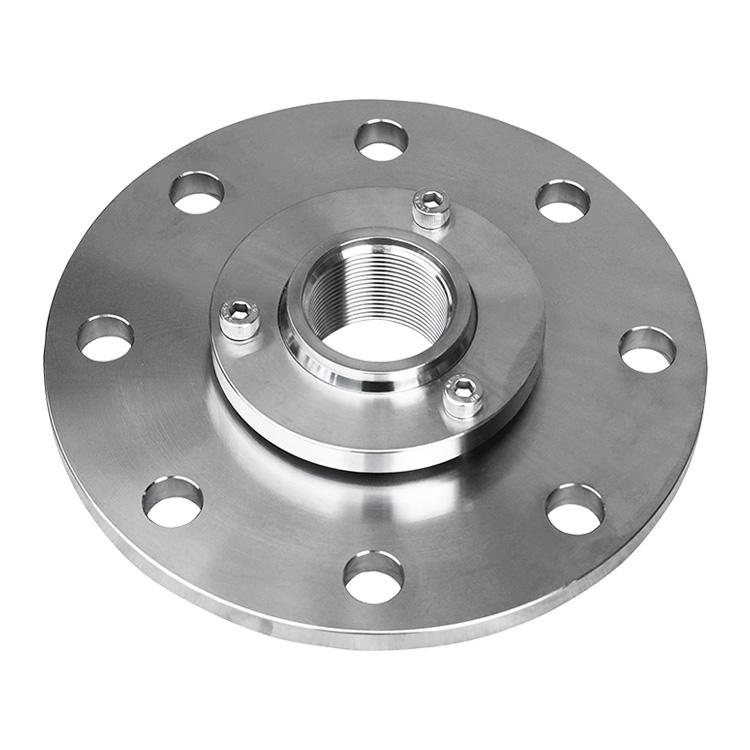
A precision slip-on flange is a widely used pipe connection component designed for
industrial assembly systems that require reliable alignment, consistent sealing, and efficient installation.
In modern industrial environments, precision matters. From process piping and mechanical assemblies to
fabrication systems and fluid handling networks, a slip-on flange provides a practical solution where
stable connection, dimensional accuracy, and repeatable performance are essential.
This guide explains the meaning of precision slip-on flanges, how they work, their key advantages, common
specifications, material options, dimensional factors, and typical industrial applications. The content is
written in a search-friendly format for blog pages, category pages, product education pages, and industrial
directory pages. It focuses only on general industry knowledge, with no company recommendations.
A precision slip-on flange is a flange type that slides over the outside diameter of a pipe
before being welded in place. It is called “slip-on” because the pipe passes through the flange bore with a
small clearance, allowing easier positioning during assembly. The word “precision” refers to tighter control
over manufacturing tolerances, face flatness, bore accuracy, surface quality, and dimensional consistency.
In industrial assembly systems, a precision slip-on flange is valued for its balance of ease of installation
and dependable mechanical performance. It is commonly used where fast alignment is important, where welding
access is available, and where the piping system must maintain stable connection integrity under normal
operating conditions.
Unlike a loose fitting or unmachined part, a precision flange is produced with more exact dimensional control.
This improves the likelihood of proper pipe fit-up, better weld preparation, and more consistent assembly results.
For engineers, fabricators, and maintenance teams, this can reduce installation time and support higher-quality
system output.
The working principle of a slip-on flange is straightforward. The flange is first slipped onto the pipe end.
The pipe is then inserted into the mating system and positioned at the correct depth. After alignment, the
flange is welded both inside and outside, depending on design requirements and applicable standards.
This configuration allows the flange to be installed more easily than some other flange types, especially when
exact pipe end preparation is not the top priority. In industrial assembly systems, this can simplify field work,
improve production speed, and reduce the complexity of pipe joining operations.
The precision aspect is important because accurate bore size, flange thickness, and face geometry help ensure
better alignment with mating components. In systems where leak resistance, structural reliability, and repeatable
assembly are important, dimensional precision supports better overall performance.
Precision in flange design affects almost every stage of installation and operation. A well-made precision
slip-on flange helps ensure the pipe can be seated properly, the weld area is consistent, and the mating face
aligns correctly with other system parts.
In industrial assembly systems, poor dimensional control can create problems such as uneven welding,
misalignment, leakage risk, premature wear, or unnecessary installation delays. Precision reduces these risks
by improving repeatability and ensuring that each flange performs more consistently across batches and projects.
Precision also matters for system maintenance. If replacement parts match expected dimensions, technicians can
install them more efficiently, reduce rework, and maintain stable performance over time. This is especially
valuable in facilities that rely on standardized components and scheduled maintenance programs.
Precision slip-on flanges are used across a broad range of industrial assembly systems. Their practical design
makes them suitable for applications where moderate pressure, reliable connection, and efficient assembly are
important.
These applications often require a balance of cost, speed, and dependable performance. Precision slip-on flanges
are particularly useful when the system is built around standardized parts and repeatable fabrication methods.
The material choice for a precision slip-on flange depends on system pressure, temperature, corrosion exposure,
process media, and installation environment. Industrial assembly systems often use a range of metals to achieve
the necessary performance characteristics.
| Material Type | Common Properties | Typical Industrial Use |
|---|---|---|
| Carbon Steel | Strong, economical, widely available | General process piping, utility systems, structural assembly |
| Stainless Steel | Corrosion resistant, durable, cleanable | Food processing, chemical systems, sanitary-related applications |
| Alloy Steel | Improved strength and heat resistance | High-demand industrial environments, elevated temperature service |
| Nickel Alloy | Excellent resistance to aggressive media | Specialty chemical processing, harsh environments |
| Duplex Stainless Steel | High strength and strong corrosion resistance | Marine, chemical, and demanding industrial systems |
Material selection should always match the service environment. Even a precision flange will not perform well if
the material is not compatible with the application conditions.
Precision slip-on flanges are commonly described by a combination of size, pressure rating, face type, material,
and dimensional standard. These specifications help engineers and purchasers select the correct part for the
intended industrial assembly system.
| Specification | What It Describes | Why It Matters |
|---|---|---|
| Nominal Pipe Size (NPS) | Compatible pipe size | Ensures correct fit with the pipeline system |
| Pressure Class | Pressure rating of the flange | Determines suitability for operating conditions |
| Face Type | Raised face, flat face, or other face style | Affects sealing and gasket compatibility |
| Material Grade | Base metal composition | Impacts corrosion resistance, strength, and temperature tolerance |
| Standards Compliance | Manufacturing standard such as ASME or DIN | Supports interchangeability and technical conformity |
| Surface Finish | Condition of sealing and mating surfaces | Can influence gasket sealing performance |
| Bore Dimension | Internal opening diameter | Determines pipe insertion and alignment quality |
| Thickness | Overall flange body thickness | Relates to strength, rigidity, and pressure capacity |
A precision slip-on flange is evaluated by several dimensional features that influence fit and performance.
These include outer diameter, inner bore, flange thickness, bolt circle diameter, bolt hole count, and face
geometry. Exact values vary by standard and size.
Dimensional accuracy is particularly important because it affects the welding process and the final assembly.
A flange with the right bore clearance and correct thickness helps the pipe sit properly, while accurate bolt
hole placement supports reliable connection to the mating flange.
| Dimensional Feature | Function in the Assembly | Quality Importance |
|---|---|---|
| Outer Diameter | Defines the flange footprint | Supports standard connection geometry |
| Inner Bore | Allows pipe insertion | Critical for slip fit and alignment |
| Thickness | Provides body strength | Influences structural rigidity |
| Bolt Hole Pattern | Supports bolted connection | Must match the mating flange |
| Facing Surface | Sealing interface for the gasket | Impacts leak resistance |
| Weld Area | Connection zone between flange and pipe | Important for joint reliability |
In industrial assembly systems, several flange styles are used depending on performance goals. Precision
slip-on flanges are often chosen for simplicity and fast installation, while other flange types may be selected
for specialized pressure, alignment, or structural requirements.
| Flange Type | Main 특징 / Characteristics | Common Use Case |
|---|---|---|
| Slip-on Flange | Slides over the pipe; welded in place | General industrial piping and assembly |
| Weld Neck Flange | Has a long tapered hub for stress distribution | High-pressure and critical service systems |
| Blind Flange | Solid flange used to close pipe ends | System isolation and pressure testing |
| Threaded Flange | Connects without welding | Low-weld or temporary installations |
| Socket Weld Flange | Pipe inserts into a socket before welding | Small-diameter, high-integrity connections |
Compared with these options, a precision slip-on flange offers an effective middle ground. It is easier to
install than many high-integrity flange styles while still delivering dependable connection quality when properly
designed and welded.
Industrial assembly systems often require components that are not only strong but also efficient to install
and standardize. Precision slip-on flanges support this goal by allowing rapid assembly, simplified
positioning, and dependable connection to piping or equipment interfaces.
In large-scale fabrication, small efficiency gains matter. Faster fit-up, less rework, and easier alignment can
translate into improved productivity. Precision slip-on flanges help reduce common assembly errors because the
part geometry is designed to be consistent from one unit to another.
Another advantage is accessibility. In many applications, welding a slip-on flange is more straightforward than
working with a more complex connection design. This can be especially helpful in tight industrial spaces,
maintenance zones, and production lines where time and access are limited.
Although the slip-on flange itself does not create the seal, it plays a critical role in the integrity of the
bolted flange joint. The seal is typically formed by a gasket placed between the flange faces. For this reason,
face quality, flatness, and bolt-hole alignment are key factors in performance.
A precision slip-on flange supports sealing by maintaining accurate geometry and consistent facing conditions.
This helps the gasket compress evenly and reduces the likelihood of localized leakage. In industrial systems
where fluid containment is important, this can improve operational reliability.
Proper gasket selection, correct bolt tightening, and appropriate flange face compatibility are all essential.
Even a precision-machined flange needs correct installation practices to achieve the desired sealing result.
Slip-on flanges are generally welded to the pipe after fit-up and alignment. The process may involve internal
and external welds depending on the design and system requirements. Good preparation helps ensure strong joint
formation and better long-term reliability.
Accurate installation is just as important as precise manufacturing. A well-made flange must still be correctly
fitted, welded, and tightened to deliver expected performance in industrial assembly systems.
The quality of a precision slip-on flange depends on more than just raw material selection. It also depends on
how the part is formed, machined, inspected, and finished. Manufacturers aiming for precision typically monitor
multiple quality factors to ensure repeatable results.
| Quality Factor | Why It Matters |
|---|---|
| Dimensional Accuracy | Supports proper fit, alignment, and interchangeability |
| Face Flatness | Improves gasket contact and sealing reliability |
| Surface Finish | Influences sealing surface behavior and joint stability |
| Bore Tolerance | Determines how easily the flange fits over the pipe |
| Hole Position Accuracy | Ensures correct bolting alignment with mating flanges |
| Material Integrity | Supports strength, corrosion resistance, and service life |
| Inspection and Testing | Confirms conformance to technical requirements |
These factors are important in any industrial assembly system where connection reliability and dimensional
consistency are required.
Precision slip-on flanges are available in common pressure classes that vary by standard, size, and material.
The pressure class indicates the flange’s general pressure rating under specified conditions. It is important
to note that actual operating pressure depends on many variables, including temperature and system design.
| Common Pressure Class | General Description | Typical Use |
|---|---|---|
| Class 150 | Common low-to-moderate pressure rating | Utility piping, general process systems |
| Class 300 | Higher pressure capability than Class 150 | Industrial process systems, heavier service |
| Class 600 | Suitable for more demanding service conditions | Specialized industrial piping applications |
| Other Ratings | Depending on standard and design | Application-specific industrial systems |
Pressure class must always be chosen with attention to the full operating environment rather than a single
rating number alone.
Surface finish plays an important role in how a precision slip-on flange performs in a bolted joint. The flange
face must be smooth enough to support gasket compression and sealing, while still meeting the requirements of
the application and standard used.
Precision machining helps improve the consistency of the flange face and bore. In industrial assembly systems,
this can contribute to easier alignment, better connection stability, and more predictable sealing performance.
Depending on the application, finishes may be selected to support general sealing, corrosion resistance, or
cleanability.
When selecting a precision slip-on flange for an industrial assembly system, several factors should be reviewed
carefully. The correct choice depends on operating pressure, temperature, media, connection standard, and
installation method.
For SEO-oriented industrial pages, the following keyword variations are commonly related to precision slip-on
flanges and can help support topical relevance when used naturally in content:
Using these phrases naturally throughout a page can help reinforce topic relevance for search engines while
keeping the content readable for human visitors.
If this content is being placed into a blog, directory page, or industry landing page, it is useful to maintain
a clear heading structure, descriptive language, and consistent keyword focus. Search engines respond well to
content that answers user intent directly and covers the topic comprehensively.
A precision slip-on flange page works especially well when it combines technical education with keyword-rich
descriptions, because many users search for both definitions and practical product details.
A precision slip-on flange for industrial assembly systems is a practical, efficient, and
widely used connection component that supports reliable pipe joining, easier installation, and consistent
dimensional quality. Its slip-on design makes alignment simpler, while precision manufacturing helps ensure
better fit, improved repeatability, and dependable performance in a range of industrial applications.
By understanding flange materials, pressure classes, dimensional features, machining quality, and installation
considerations, engineers and industrial buyers can make more informed decisions. Whether used in process piping,
utility systems, or mechanical assembly environments, a precision slip-on flange remains a valuable part of modern
industrial connection design.
```


Copyright © 2022 Zhejiang Songlin Flange Co., Ltd.
Plan du siteCe site Web utilise des cookies pour vous garantir la meilleure expérience sur notre site Web.

 English
 Español
 Pусский
 Deutsch
 日本語
日本語 한국어
한국어 العربية
 Italiano
 Nederlands



 WhatsApp
 Téléphone
Commentaire
(0)