
 English
 Español
 Pусский
 Deutsch
 日本語
日本語 한국어
한국어 العربية
 Italiano
 Nederlands
système de convoyeur industriel
An industrial conveyor system is a mechanical material-handling solution designed to move products, raw materials, or finished goods efficiently from one point to another within a facility. It is widely used in manufacturing plants, warehouses, distribution centers, mining operations, food processing lines, packaging workshops, and many other industrial environments. By automating the transportation process, a conveyor system helps reduce manual labor, improve productivity, and maintain a steady workflow.At its core, an industrial conveyor system consists of a frame, driving unit, belt or rollers, supporting structures, and control components. The exact design depends on the application, load requirements, operating speed, and environmental conditions. Common types include belt conveyors, roller conveyors, chain conveyors, screw conveyors, and overhead conveyors. Belt conveyors are among the most popular because they can handle a wide range of materials and provide smooth, continuous movement. Roller conveyors are often used for cartons, pallets, and rigid items. Chain conveyors are suitable for heavy loads, while screw conveyors are ideal for transporting powders, granules, and loose materials.One of the main advantages of an industrial conveyor system is efficiency. Instead of relying on workers or forklifts to transport items repeatedly, the conveyor can move materials automatically and continuously. This saves time, lowers operational costs, and reduces the risk of workplace injuries. Conveyor systems also help organize production lines by creating a predictable flow of materials. This is especially important in assembly lines, where each workstation depends on timely delivery of parts.Another important benefit is flexibility. Conveyor systems can be customized to fit different layouts and production needs. They may run horizontally, incline upward, decline downward, or curve around corners. Some systems are designed for heavy-duty industrial use, while others are built for clean-room or food-grade environments. Additional features such as speed control, sensors, sorting devices, accumulation zones, and automated stop-start functions can be integrated to improve performance.Industrial conveyor systems also contribute to quality control. By moving products at a controlled pace, they help maintain consistency in production and reduce handling damage. In industries such as food, pharmaceuticals, and electronics, conveyors support hygiene, precision, and traceability. They can be designed with stainless steel, washdown components, or special coatings to meet strict operating standards.Maintenance is an essential part of keeping a conveyor system running reliably. Regular inspection of belts, motors, bearings, rollers, and alignment helps prevent breakdowns and unexpected downtime. Proper lubrication, cleaning, and tension adjustment can extend the service life of the equipment and ensure safe operation. Modern conveyor systems may also include monitoring technology that detects wear, overload, or abnormal vibration before serious problems occur.In conclusion, an industrial conveyor system is a vital tool for modern material handling. It improves efficiency, reduces labor intensity, enhances safety, and supports stable production processes. With the right design and maintenance, a conveyor system can deliver long-term value and become an essential part of industrial operations.
Produit
Catégorie:
-
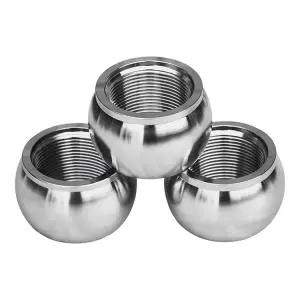
Unité de transfert à billes de précision pour des applications de flux de matériaux fluides
Leur classification: Bride standardVues: 183Numéro:Temps de libération: 2026-07-01 14:21:42L'unité de transfert à billes de précision est un composant de manutention industrielle avancé conçu pour un mouvement fluide et multidirectionnel et une optimisation efficace du flux de travail. Largement utilisé dans les systèmes de convoyeurs, les lignes de conditionnement et les stations d'assemblage, il réduit l'effort manuel tout en améliorant la vitesse et la sécurité opérationnelles. Avec une construction durable en acier inoxydable et en acier au carbone, il garantit une longue durée de vie, même dans des environnements difficiles. Idéale pour les secteurs de la logistique, de la fabrication et de l'automatisation, cette solution prend en charge un positionnement flexible des matériaux sans endommager la surface. En tant que fournisseur de confiance, nous fournissons des unités de transfert à billes de haute qualité qui répondent aux normes industrielles mondiales, aidant les entreprises à atteindre une productivité plus élevée et un flux de matériaux plus fluide dans leurs opérations quotidiennes.
Actualités
Catégorie:
-
[industry news]Precision Neck Flange for Industrial Assembly Systems
2026-09-04 04:20:28
Affaire
Catégorie:
Aucun résultat de recherche!
Vidéo
Catégorie:
Aucun résultat de recherche!
Téléchargement
Catégorie:
Aucun résultat de recherche!
Recrutement
Catégorie:
Aucun résultat de recherche!
Produits recommandés
Aucun résultat de recherche!



 WhatsApp
 Téléphone